What is a continuous footway?
A continuous footway is where the pavement on a main road continues across the mouth of a side road junction, similar to how driveways are designed, to emphasise the pedestrian’s priority. Drivers on the side road should slow down, give way to any pedestrians waiting to cross, and then give way to traffic on the major road before pulling out. They can wait on the crossing once it is clear. Drivers should give way to pedestrians waiting as they turn onto or off any road, regardless of whether there is a continuous footway there (Highway Code rule H2)
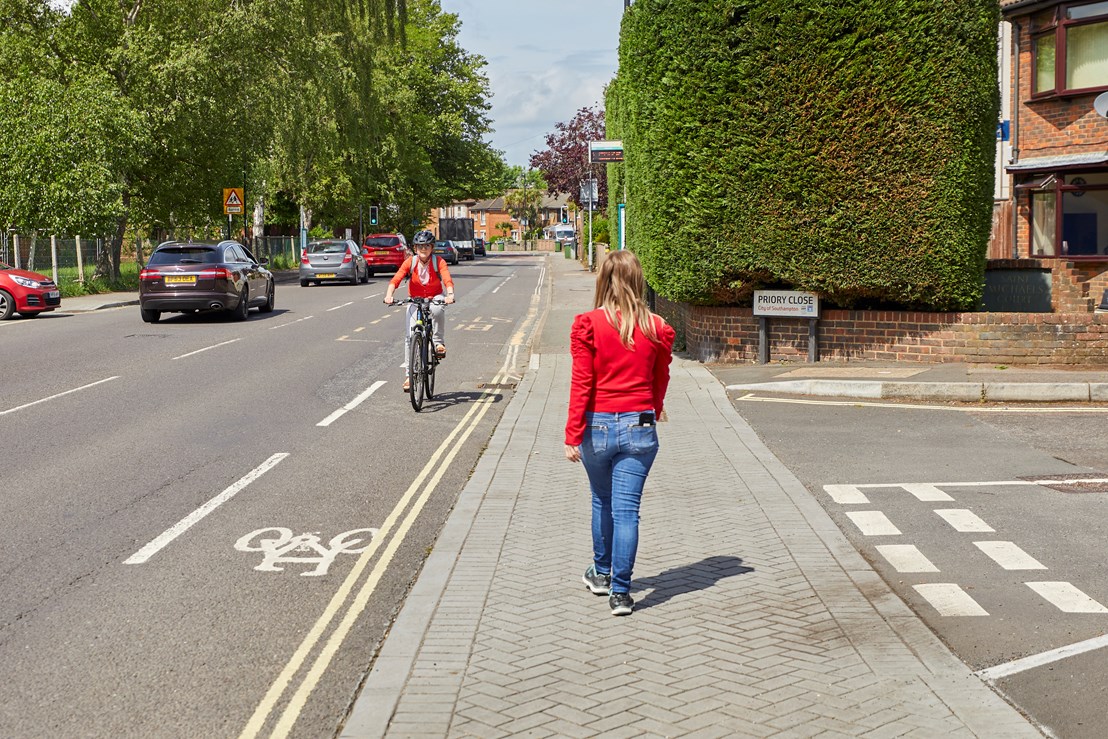
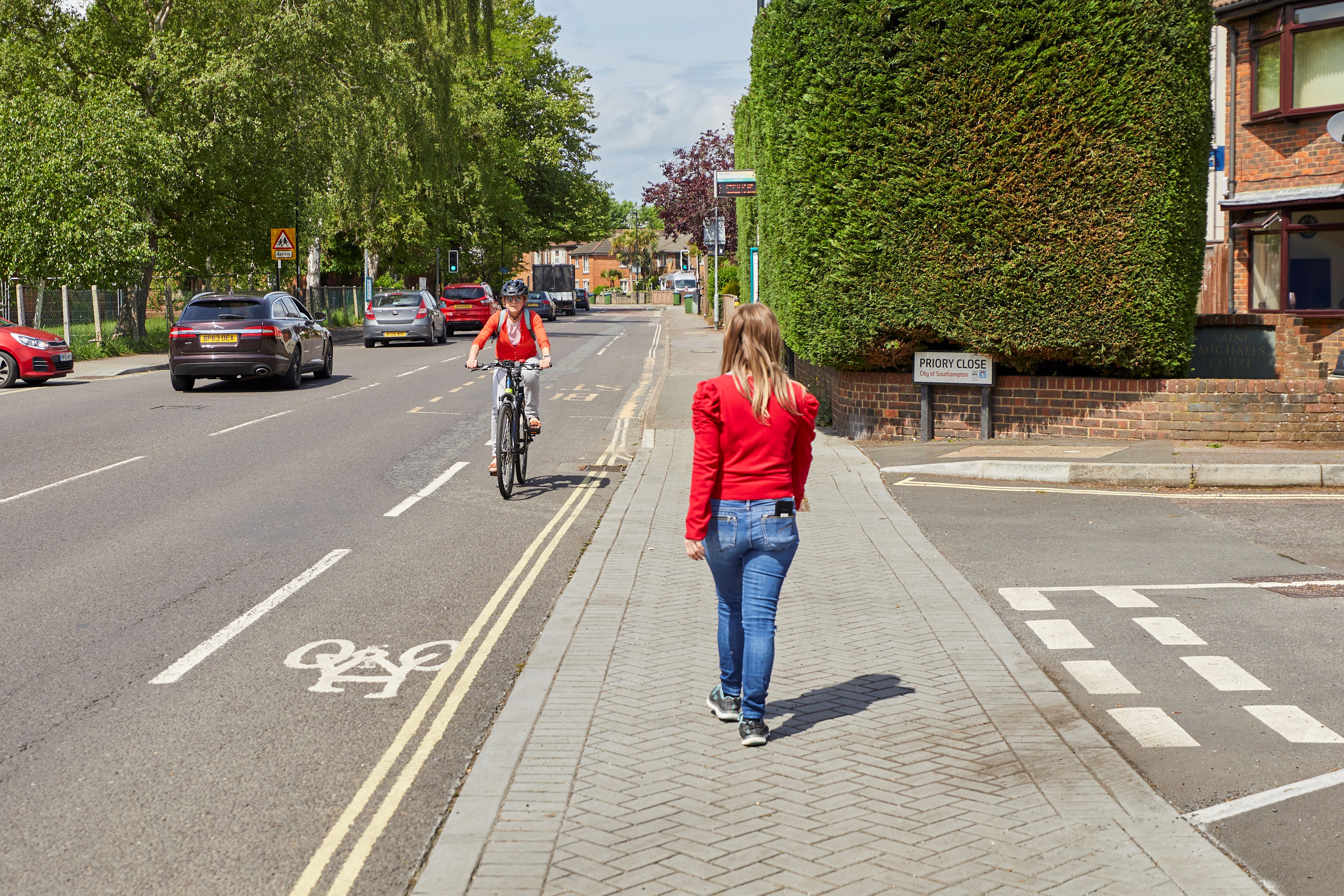
Example of a continuous Footway in St Denys
What will happen to the planter at Thornhill Road?
The planter and bench will be kept as they are, and some of the bollards and guardrails will be removed or relocated to make space for the new pedestrian crossing. There will be no change to the motor vehicle restrictions here.
Why are signalised crossings proposed, rather than zebra crossings?
National design guidance from Active Travel England recommends that zebra crossings are used where less than 8000 vehicles per day travel along a road. This section of Winchester Road typically sees around 24,000 vehicles per day, nearly 3x this limit, so a signalised crossing is required to ensure safety and comfort for users.
How will these changes effect emergency vehicles, particularly ambulances?
We have consulted South Central Ambulance Service on these proposals, and they have no concerns about their crews’ ability to navigate the road layout proposed. We will continue to work with them as this scheme progresses and take on any feedback received.